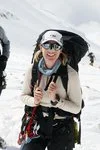
What Everest Taught IFMGA Guide Alejo Lazzati About Risk, Humility, and a Lifetime in the Mountains
From homemade climbing gear on Cotopaxi to the summit of Mount Everest, Alejo Lazzati's journey proves that great mountaineers aren't defined by the peaks they reach but by the mindset they develop along the way.
When Alejo Lazzati talks about climbing mountains, he rarely starts with the summit.
Instead, he talks about curiosity.
Long before he became the first Ecuadorian to earn IFMGA certification, before guiding expeditions across the Andes, Alaska, and the Himalaya, and before standing on the summit of Mount Everest, he was simply a 14-year-old who couldn't stop thinking about a mountain he could see on the horizon.
That mountain was Cotopaxi.
It became the beginning of a career that would eventually span some of the world's most iconic peaks, but more importantly, it shaped a philosophy centered on preparation, humility, and respect for risk.
A First Climb Fueled by Determination
Alejo didn't grow up surrounded by expensive gear or experienced climbers.
When a friend returned from climbing Cotopaxi, Alejo immediately wanted to experience it himself.
The equipment wasn't exactly what you'd find on a modern gear list.
He borrowed crampons, wore rubber fishing boots, and used a climbing harness made from a karate belt by a local shoemaker.
Looking back, he openly admits the climb involved more enthusiasm than good judgment.
Yet that experience sparked something far greater than a successful summit.
It revealed a lifelong passion.
Today, after decades of guiding climbers around the world, Alejo often reflects on that first climb as both inspiring and humbling. It reminds him how much knowledge, training, and preparation truly matter in the mountains.
Ecuador: A Mountaineer's Playground
Growing up in Quito gave Alejo access to one of the most unique climbing destinations on Earth.
Within just a few hours, climbers can reach glaciated volcanoes approaching 20,000 feet, complete challenging alpine routes, and return to comfortable accommodations the very same day.
That accessibility creates an incredible training ground.
Instead of spending days approaching remote mountains, climbers can focus on developing movement skills, decision-making, and experience across varied terrain.
It's one reason Ecuador has become one of the world's premier destinations for mountaineering education and altitude training.
Competition Built Precision. Guiding Built Perspective.
Alejo's early climbing years weren't limited to mountaineering.
He became one of Ecuador's top competition climbers, eventually earning the title of Vice Pan-American Champion.
Competitive climbing sharpened his movement and technical precision.
Guiding taught him something entirely different.
Success was no longer measured by his own performance, but by helping others make good decisions, stay safe, and return home with meaningful experiences.
That shift—from athlete to guide—changed how he viewed the mountains.
Why Aconcagua Is More Than a Summit
Having guided approximately 25 expeditions on Aconcagua, Alejo sees South America's highest peak as one of the world's best classrooms for aspiring expedition climbers.
The lessons extend far beyond altitude.
Long expeditions teach patience, logistics, teamwork, energy management, and how seemingly insignificant mistakes accumulate over time.
One phrase he frequently shares with clients captures that philosophy perfectly:
"Go up complete. Come down complete."
Reaching the summit only matters if everyone returns safely.
The Psychology of Risk
Perhaps the most fascinating part of Alejo's conversation wasn't about Everest at all.
It was about decision-making.
Years of avalanche education introduced him to the concept of heuristics, the mental shortcuts people rely on under stress.
Experience doesn't eliminate these biases.
In many situations, even highly trained climbers can fall into the same psychological traps as beginners.
Rather than pretending fear doesn't exist, Alejo encourages acknowledging it.
Fear isn't weakness.
It's information.
Recognizing how fear affects judgment allows climbers to make better decisions instead of simply reacting to emotion.
Everest Wasn't the Hardest Part
Only weeks before recording the podcast, Alejo stood on the summit of Mount Everest.
Despite spending years imagining the world's highest mountain, the reality surprised him.
Camp Four was harsh, exposed, and unforgiving. During his summit push, he encountered the realities that rarely appear in photographs: violent winds, extreme altitude, and climbers who would never return home.
Ironically, Alejo doesn't consider Everest the most technically difficult climb of his career.
What makes Everest so demanding is the accumulation of everything else.
Weeks at altitude.
Long days on fixed ropes.
Cold.
Fatigue.
And the constant need to make good decisions despite physical exhaustion.
By the time he reached Everest, he wasn't relying on a single training cycle.
He was relying on every lesson he'd learned since that first climb on Cotopaxi decades earlier.
Why IFMGA Certification Matters
As the first Ecuadorian to earn IFMGA certification, Alejo is careful not to describe it as the finish line.
Instead, he compares it to earning a pilot's license.
The certification represents a globally recognized standard that demonstrates competence across technical terrain, risk management, rescue systems, and professional guiding practices.
It's not designed to prove someone is the world's best guide.
It's designed to ensure guides meet a consistent level of knowledge and skill, regardless of whether they're working in the Cascades, the Alps, the Andes, or the Himalaya.
Alejo has also helped strengthen guide education in South America by advocating for avalanche safety training within the IFMGA curriculum, helping future guides develop an even more complete foundation for working in complex mountain environments.
The Mountain Always Has the Final Say
For all of Alejo's accomplishments, one idea surfaces again and again.
The mountain is never conquered.
It isn't controlled.
It doesn't negotiate.
Instead, great guides learn to observe, adapt, and respect the conditions they're given.
Sometimes that means reaching the summit.
Sometimes it means turning around.
In Alejo's eyes, neither outcome defines success.
The true measure of a climb is returning home safely, wiser than when you started.
If you're preparing for your own mountaineering goals, building a strong foundation is just as important as choosing the right objective. Explore our Training Plans for structured preparation, or learn how Personalized Mentorship can help you train with guidance tailored to your experience and ambitions.
If you enjoyed reading this recap, explore the Finding Elevation Podcast archive to listen to the full conversations and discover more inspiring guests.