
Optimizing Nutrition for Mountain Athletes: Expert Tips from Dietitian Rebecca Dent
In this episode of Finding Elevation, I had the pleasure of speaking with Rebecca Dent, a dietitian specializing in sports nutrition for mountain athletes. With over 20 years of experience, Rebecca has worked with hundreds of climbers and ultra-endurance runners, helping them optimize their nutrition for better performance.
Fueling for Mountain Performance
Rebecca emphasizes that a common mistake athletes make is not planning or practicing their nutrition strategy before heading into the mountains. Whether you're summiting a peak or running an ultra-endurance race, proper fueling is crucial. Athletes often think, "I’ll just eat whatever I bring," but without a clear strategy, energy levels can plummet, leading to bonking—a condition where glycogen stores are depleted, causing extreme fatigue.
Key Tip: Plan your nutrition per hour of moving time. Whether it’s real food or sports products, ensure you’re consuming 200-400 calories of carbohydrates every hour to maintain energy levels.
The Importance of Hydration
Rebecca explains that many athletes underestimate the importance of hydration, starting their training or climbs already dehydrated. She stresses that starting your day well-hydrated can significantly affect your performance. Even slight dehydration increases heart rate and perceived effort, making physical tasks feel much harder.
Pro Tip: Calculate your daily hydration needs by multiplying your body weight in kilograms by 35 milliliters. Make sure to hydrate consistently, not just when you feel thirsty.
Planning for High Altitude
When it comes to fueling at high altitudes, Rebecca points out that the digestive system slows down, making it harder to digest protein. Carbohydrates become the preferred fuel source at altitude. She suggests practicing your nutrition plan during training so that when it’s time to climb, your body is used to eating on the go.
Strategy: Create a detailed nutrition plan that includes specific foods and hydration strategies for each day of your mountain adventure. This will reduce decision-making and ensure you’re fueling consistently.
Recovery Nutrition
According to Rebecca, recovery starts immediately after you finish a training session or summit. Consuming a recovery shake that includes carbohydrates, protein, and fluids helps restore energy levels and promotes muscle repair.
Recovery Tip: Use products like Tailwind Recovery or a simple shake with milk and a banana to kickstart the recovery process after a long day in the mountains.
Want to dive deeper into Rebecca’s nutrition insights? Listen to the full episode of Finding Elevation with Rebecca Dent here and learn how to elevate your performance through optimized nutrition.
Coping with the Post-Summit Letdown: A Guide for Climbers
Summiting a peak is an incredible achievement, but what comes after can sometimes feel less thrilling. This guide delves into the "letdown effect," a common experience among climbers after reaching a significant goal, and provides strategies for coping with it.
Understanding the Letdown Effect
The letdown effect is a phenomenon where climbers feel a decline in mental and physical well-being after a peak experience. Symptoms may include apathy, fatigue, and even physical signs like hair loss. This can happen due to the loss of routine and the strong bonds formed during the climb.
Strategies for Recovery
Rest and Nutrition: Allow your body to recover with proper rest and a balanced diet, especially if weight was lost during the climb.
Stay Active, But Gently: Engage in low-intensity activities such as walking, yoga, or kayaking to aid physical recovery.
Psychological Recovery: Protect your experience by being selective about sharing details with others and process your thoughts through journaling or meditation.
Planning Your Next Adventure
While it's tempting to plan your next climb immediately, allow time to reflect on the previous experience before setting new goals.
The Ultimate Guide to Climbing Mount Rainier: Routes, History, and Preparation
Mount Rainier, the highest peak in Washington State, stands as a beacon for climbers and adventurers. Whether you're a seasoned mountaineer or a first-time climber, embarking on a Rainier journey requires preparation. This guide will cover everything you need to know about the history, popular climbing routes, and training tips to help you conquer this iconic mountain.
Mount Rainier’s Rich History
Discover the early attempts at summiting the mountain, including the first successful ascent in 1870 by Philomund Beecher van Trump and Hazard Stevens. Explore the mountain’s significance to Native American tribes and how it has been a gateway mountain for many climbers.
Popular Climbing Routes
Disappointment Cleaver Route: The most popular route, with over 7,000 climbers annually.
Emmons Route: Known for its lower rockfall risk and more extended approach through an alpine forest.
Tips on choosing the right route for your skill level and what to expect along the way.
Preparing for Your Ascent
Importance of building endurance, strength training, and carrying a heavy backpack.
Mental preparation techniques to overcome fear of crevasses and high-altitude exposure.
Mount Rainier is more than just a climb; it's a journey through history, nature, and self-discovery. Prepare well, choose your route wisely, and respect the mountain.
How to Build Mental Toughness in Mountaineering: Lessons from Courtney Heitter
In this episode of Finding Elevation, I speak with Courtney Heitter about her path to becoming a mountaineer, despite not growing up athletic. Through endurance sports and trail running, Courtney discovered a passion for the mountains that pushed her far outside her comfort zone.
One of the key takeaways from our conversation is how discomfort plays a pivotal role in achieving your dreams. Courtney explains how embracing challenges—like gear malfunctions during summit attempts—helped her grow mentally stronger. Her motto? "Discomfort is the currency of your dreams."
Whether it’s overcoming failure on Mount Rainier due to asthma or struggling with crampons on Cayambe, Courtney’s journey is proof that resilience is key in mountaineering. She emphasizes the importance of having a support system and reframing failure as a learning experience.
Want to hear more about Courtney’s insights on mental toughness? Listen to the full episode of Finding Elevation here, and discover how to embrace discomfort in your adventures.
Why Acclimatization is About More than Red Blood Cells
Imagine standing at the base of a towering mountain, the air crisp and thin. For many, this is a dream, but the journey to the summit requires more than just determination. It demands an understanding of how our bodies adapt to high altitudes. In a recent conversation, exercise physiologist Tom Cuddy shared insights into the physiological changes that occur when we ascend to great heights.
The Physiology of Altitude: When we ascend to high altitudes, our bodies undergo significant changes to cope with the reduced oxygen pressure. Tom explains that the initial response includes an increase in respiration rate and volume to enhance oxygen intake. This adaptation is crucial for survival and performance at elevations above 8,000 feet.
The Role of CO2: Interestingly, CO2 plays a vital role in this process. While we often focus on oxygen, Tom highlights that CO2 acts as a vasodilator, helping to regulate blood flow to the brain. This balance is essential to prevent symptoms like headaches, commonly experienced at high altitudes.
Blood Adaptations: As we acclimatize, our bodies also adjust blood composition. The process of renal diuresis reduces plasma volume, increasing the concentration of hemoglobin and enhancing oxygen transport. However, this comes at the cost of potential dehydration, emphasizing the need for careful hydration management.
Genetic Factors and Training: Genetics also play a role in how individuals respond to altitude. Populations like the Tibetans and Andeans have adapted over millennia, showcasing different physiological strategies. For recreational mountaineers, pre-exposure and training can improve acclimatization. Techniques like hypoxic tents and breathing exercises can enhance red blood cell production and lung capacity.
Recovery and Nutrition: Recovery is another critical aspect. Tom suggests that using supplemental oxygen at base camps can aid in recovery between climbs. Additionally, dietary sources like beetroot can boost nitric oxide levels, supporting better blood flow and oxygen transport.
Unlocking Exercise Physiology for Endurance Athletes: Insights from Tom Cuddy
As endurance athletes, understanding our bodies' physiological responses during exercise is crucial for optimizing performance. In a recent episode of my podcast, Finding Elevation, I had the opportunity to speak with Tom Cuddy, an expert in exercise physiology and founder of Calibrated Coaching.
Tom explains the different energy systems fueling our bodies, from immediate ATP sources to the aerobic system that requires oxygen. He emphasizes the significance of lactate thresholds and VO2max testing, revealing how they impact our performance during intense activities like mountaineering and trail running.
One compelling topic was Tom's research on "vertical running economy." He highlights how even at the same VO2max, athletes can exhibit vast differences in uphill running speed based on their lactate levels and economy. Training to improve these factors can significantly enhance performance.
For serious athletes, Tom offers personalized physiological testing services, providing a comprehensive analysis to optimize your training approach.
Listen to the full conversation with Tom Cuddy on the Finding Elevation podcast here. Visit Calibrated Coaching for more information.
Mountain Medicine: How to Stay Healthy at High Altitude with Physician Tracee Metcalfe
High-altitude climbing is rewarding but poses serious risks to your health if you're not properly prepared. On my podcast, Finding Elevation, I spoke with Dr. Tracee Metcalfe about the best strategies to prevent altitude sickness and stay healthy on your climbs.
1.What Happens to Your Body at High Altitude?
• Tracee explains that your body begins to acclimatize by increasing breathing rates and red blood cell production.
• Prevent dehydration by drinking extra fluids in the first 24-48 hours.
2. Key Strategies to Prevent Altitude Sickness
• Tracee suggests using acetazolamide (Diamox) as a preventative measure.
• Managing blisters and covering your face properly can prevent infections and other complications.
3. Recognizing Symptoms and Taking Action
• Fatigue and difficulty breathing are warning signs of serious altitude sickness. In such cases, immediate descent and oxygen treatment are necessary.
Want to hear more from Dr. Tracee Metcalfe? Listen to the full podcast episode here to get deeper insights on high-altitude health, acclimatization, and empowering women climbers.
Preparing for Mount Everest: Pro Tips for a Successful Summit
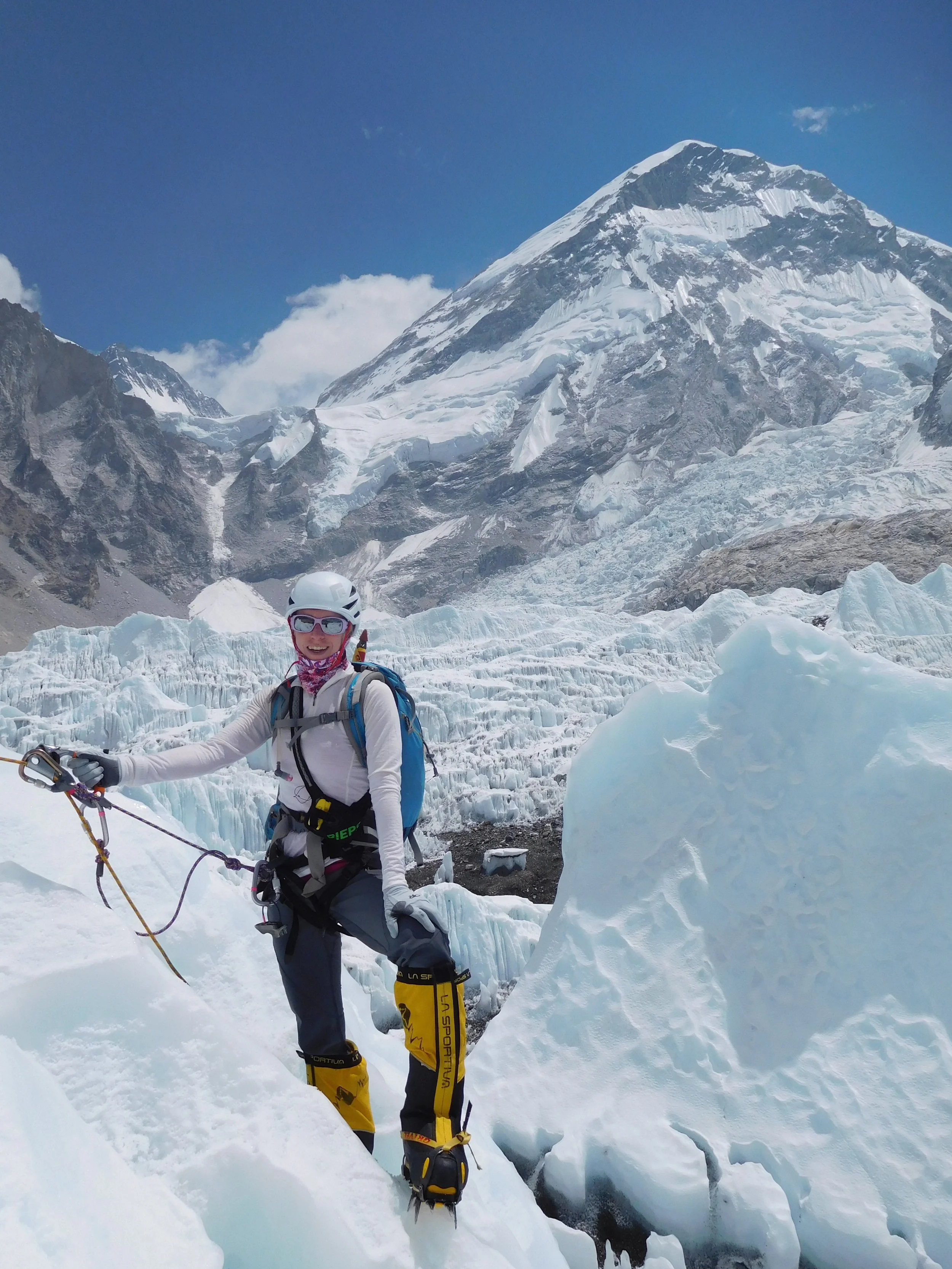
Climbing Mount Everest, the highest mountain in the world, is an extraordinary challenge requiring extensive planning. Here are my expert tips for preparing to reach this iconic summit.
Develop a Strong Fitness Foundation
Physical fitness is non-negotiable. Focus on building cardiovascular endurance through months of zone 2 cardio training, complemented by lower body and core strength exercises. Attempting to summit another 8,000-meter peak first provides valuable experience in high-altitude conditions.
Master the Mental Game
Mental resilience plays a significant role in high-altitude climbing. Engage in visualization techniques, utilize mantras, and learn to overcome smaller challenges to build confidence. Understanding your motivations and setting a clear intention to summit will prepare your mind for the climb.
Prepare for the Unexpected
Unexpected situations can arise on Everest, so it's essential to anticipate potential challenges. Prepare a plan for each concern, whether it involves weather conditions or health issues. Always be mindful of your limits and be prepared to turn back if necessary.
Gear Up Properly
Proper gear can make or break your expedition. Ensure your oxygen mask fits correctly with your headgear, and consider adding practical features like a pee zipper. Test equipment, such as heated gloves, to guarantee they function effectively during the climb.
Support Your Summit
Find motivation through voice memos from loved ones or write a letter to yourself for encouragement. Document your journey with a post-summit selfie to capture your hard-fought achievement.
With these insights, you’ll be prepared for an Everest expedition that prioritizes health and safety. Remember, no mountain is worth risking your well-being. Trust your instincts and enjoy the incredible journey.
Finding Your Why in the Great Outdoors

In my latest episode of Finding Elevation, I tackle a vital topic: discovering your deeper purpose for outdoor adventure. As an avid mountaineer, I’ve come to understand how crucial it is to identify what drives us in the wilderness.
Growing up in the flatlands of Illinois, I didn’t see myself as an "outdoorsy" person. It wasn’t until I moved to Seattle for a corporate role that I felt compelled to climb and fit in with my athletic colleagues. Initially, my motivations were rooted in insecurity and the desire to prove myself.
The real turning point came when I faced a cancer diagnosis. This life-altering event pushed me to reassess my motivations. I discovered that my climbing pursuits weren’t simply acts of defiance; they were journeys of self-discovery and personal growth. My focus gradually shifted toward empowering women and giving back to the mountain communities that have shaped my journey.
In this episode, I share practical advice for clarifying your “why.” Techniques like journaling and repeatedly questioning your motivations can help you identify what truly drives you.
I also narrate a poignant experience from a fundraising climb in Nepal, where I tapped into my purpose—supporting education for girls to push through the toughest moments.
Understanding your motivations in the outdoors leads to more fulfilling adventures. I invite you to take time for self-reflection and uncover what drives you to embrace nature and challenge your limits. Your "why" is the key to transformative experiences on the trail.
Aconcagua: The Ultimate Guide to Summiting the Stone Sentinel of South America
Aconcagua, the highest peak in the Southern and Western Hemispheres, offers thrilling climbing routes and a rich history that demands exceptional skills and preparation. If you're ready for this awe-inspiring journey, let's gear up!
History and First Ascents of Aconcagua
Aconcagua's history dates back to 1883, with the first successful ascent occurring in 1911. Its name comes from the Quechua language, meaning "stone sentinel" or "snowy peak." Having climbed Aconcagua in 2011, I can attest that it’s more stone sentinel than snowy peak! If you're planning to conquer Aconcagua, expect to navigate a diverse array of rocks!
The first ascent was achieved by Swiss climber Matthias Zurbriggen in 1908, who faced treacherous weather conditions but reached the summit alone. Notably, Annie Smith Peck became the first female to summit Aconcagua in 1908 at the age of 58, defying norms by wearing pants. Imagine climbing a 22,000-foot peak in a dress!
Most Popular Routes and Terrain on Aconcagua
Aconcagua features several routes, with the Normal route and the 360-degree route being the most popular. The Normal route starts in the Horrcones Valley and typically takes about three weeks to complete, covering 42 miles and gaining 13,500 feet of elevation. Meanwhile, the 360-degree route begins in the Vacas Valley, intersects with the Normal route, spans 64 miles, and ascends 15,000 feet. Although these routes don't require technical climbing skills, climbers must be physically and mentally prepared.
The terrain of Aconcagua showcases diverse landscapes, from steep, loose rock to talus and boulders. Near the summit, crampons and ice axes are often necessary, and ropes may be required for specific sections of the climb.
Skills and Training for Summiting Aconcagua
To conquer Aconcagua, climbers need a mix of skills, experience, and training. A strong physical fitness level, proficiency in navigating steep terrain, and prior high-altitude climbing experience are crucial. Build endurance, strength, and resilience through long hikes, runs, or bike rides at least six months before your climb. Focus on cardiovascular fitness, lower body, and core exercises while acclimatizing yourself to high altitudes and harsh weather conditions. Consider winter camping or training in windy (but safe) conditions to simulate mountain conditions.
Challenges and Common Mistakes
Climbing Aconcagua is challenging, with a success rate ranging from 35% to 60%. Many climbers underestimate its difficulties and the effects of high altitude. One common mistake is failing to prepare for harsh weather conditions, with summit temperatures plummeting to -20°C (-4°F) and winds exceeding 100 mph. Regularly monitor mountain forecasts and equip yourself with the appropriate gear. To prepare mentally, listen to prior-season blog posts from expedition companies and check weather websites like mountainforecast.com.
Aconcagua, South America's resilient rock giant, symbolizes human grit and determination. With its rich history, tough routes, and unforgiving weather, it ranks among the top three most challenging of the Seven Summits.
If you're eager to push your limits and test your abilities, why not tackle Aconcagua? Get in shape physically and mentally—hire Alpine Athletics to help you prepare, train smart, and soak in the beauty of this magnificent peak. Always respect the mountain, prioritize safety, and remember: it's not a race.
Train Smart. Climb Prepared.
Mental Fitness in Climbing and Mountaineering: Why It Matters and How to Prepare

When it comes to climbing and mountaineering, physical fitness, technical skills, and equipment are often prioritized. However, one critical element that significantly impacts performance is mental fitness. Mental toughness can be the differentiating factor that enables climbers and mountaineers to achieve their goals and overcome challenges in the mountains.
The Importance of Mental Preparation
While physical strength and technical skills are essential, mental preparation is equally crucial for success and safety in climbing and mountaineering. The ability to maintain focus, manage fear and stress, and stay positive in the face of adversity is essential when tackling challenging routes or high-altitude expeditions.
Tips for Enhancing Mental Preparation
Here are several effective strategies to enhance mental fitness:
1. Visualization: Visualize success and mentally rehearse the climb. Imagine each step of the route and the necessary movements. This practice can help build confidence and reduce anxiety.
2. Positive Self-Talk: Use affirmations to bolster confidence. Replace negative thoughts with empowering statements that remind you of past successes.
3. Goal-Setting: Set clear, realistic, and achievable goals for each climb. Break larger objectives into smaller tasks to foster a sense of accomplishment.
4.Managing Fear and Stress: Acknowledge fear and anxiety without letting them overwhelm you. Develop strategies such as deep breathing exercises and mindfulness techniques to manage these emotions.
Building a Support Network
Developing a strong support network is vital for maintaining mental fitness. Connect with trusted friends, mentors, or fellow climbers who can offer emotional support and motivation. Sharing your concerns and successes with this network can significantly bolster your mental resilience.
Overcoming Challenges in the Mountains
Climbing and mountaineering present various challenges, including fear, fatigue, and altitude sickness. Here are strategies to navigate these obstacles:
1. Focus on Small Tasks: Break down larger goals into manageable steps to reduce feelings of overwhelm.
2. Stay Positive: Cultivate resilience and embrace challenges as opportunities for growth.
3.Embrace Discomfort: Recognize discomfort as part of the journey and use it to strengthen your mental toughness.
Addressing Post-Climb Challenges
Post-expedition letdown is common among climbers. Acknowledge these feelings and take time to reflect on your experiences to regain purpose and direction.
Sharing Strategies and Experiences
Discussing mental challenges and strategies with others can create a supportive climbing community. By sharing insights, climbers can help each other grow and succeed.
Mental fitness is a crucial aspect of climbing and mountaineering. By incorporating mental preparation strategies, building a support network, and developing techniques to overcome challenges, climbers can enhance performance and safety in the mountains. Remember, mental strength is just as vital as physical fitness, requiring consistent effort and practice. Keep climbing, push your boundaries, and focus on building your mental toughness.
Training Your Mind for Success: Mental Toughness for Adventure Athletes
Adventure sports require not just physical strength but mental toughness. Drawing from my experience summiting K2 and the Seven Summits, I’ve learned that mental training is as crucial as any physical workout. Here’s how to train your mind for peak performance:

1. Identify Your Core Motivation
Before starting your climb, take time to discover the deeper reasons behind your goal. Ask yourself "why" multiple times to reveal your most meaningful motivation. Whether it's self-fulfillment or family, having this emotional anchor will keep you grounded during tough climbs.
2. Build Mental Resilience with Positivity
Mountaineering is unpredictable, but you can train yourself to remain positive during adversity. Start by reframing setbacks in training and using mantras like "I'm prepared for this." Celebrate small victories to reinforce a positive mindset.
3. Visualize and Practice for Challenges
Afraid of crossing ladders over crevasses? Set up similar challenges in a controlled environment to prepare mentally. Practice visualization techniques to imagine yourself succeeding, so when real challenges arise, you’ll feel ready.
4. Use a Mental Toolkit to Stay Focused
Prepare mentally for summit day by stocking up on mental "gear." Whether it’s a mantra, a note from a loved one, or a visualization exercise, find what motivates you and use it to stay sharp.
5. Don’t Neglect Physical and Mental Self-Care
Proper nutrition, hydration, and rest are key to maintaining focus and avoiding exhaustion on the mountain. Pay attention to your body’s signals, and take breaks when needed to prevent both physical and mental burnout.
6. Lean on Your Support System
Surround yourself with people who support your goals and understand the challenges of mountaineering. A strong support network can help you stay motivated and maintain perspective.
With the right mental training and support, you’ll be ready to summit any mountain. Prepare your mind as thoroughly as you prepare your body for your next adventure.
How to Choose Your Next Mountain Adventure: A Step-by-Step Guide
Looking for your next mountain adventure? From Denali to Kilimanjaro, learn how to set mountaineering goals, train effectively, and choose the right climbs to challenge yourself.

Setting Your Adventure Goals
Start by identifying your long-term goals. Do you want to climb the Seven Summits or focus on becoming a stronger, more confident climber closer to home? Setting clear goals helps you chart a path forward. If your aim is Denali, but you’ve only tackled Rainier, consider climbing longer, expedition-style mountains like Kilimanjaro or Ecuador’s volcanoes to build experience.
Training for Expedition-Style Climbs
To succeed in the mountains, think of yourself as an endurance athlete. Training for climbs like Denali requires months of high-volume, low-intensity cardio to build your cardiovascular base. Alongside physical training, focus on learning mountain strategies, dealing with unpredictable weather, and building mental resilience.
Aligning with Climbing Organizations
Whether you're aiming for local peaks or Denali, surrounding yourself with experienced climbers and reputable organizations will enhance your success. Join national programs focused on mountain education or connect with like-minded adventurers to build a supportive network.
Ready for your next challenge? Check out our tailored expedition training plans!
What is Aerobic Threshold and how can I use it to improve fitness?
So, what is aerobic threshold and why - as an endurance athlete - do I care?
The range of beats per minute that your heart can sustain is organized into zones. There are as many ways to calculate heart rate (HR) zones as there are training plans, but they are all based on a percentage of your maximum heart rate. For simplicity, we’ll consider a four zone range. Keep in mind that your heart rate can be affected by many factors like stress, hormones, sleep, and medication. Heart rate zones are are also highly personalized, they’re dependent on your genetics, age, and fitness. Your lowest intensity zone is about 50 - 60% of your maximum heart rate and should be reserved for recovery. Your body will feel at ease in this zone and you are able to breathe easily through your nose. In this range, about 85% of the calories that you burn come from fat. Since we all, no matter how fit you are, have ample fat stores, athletes are able to maintain work in this low intensity zone for hours. In part, this is because your body is using oxygen to break down, or oxidize, the fat that it needs for fuel.
As the intensity of work increases, either because workload or pace increases or the terrain steepens, your heart beats faster to meet the demand for oxygen from your muscles. You are now in your second heart rate zone, and working at about 60 - 75% of your maximum heart rate. As the demand on your body increases, less oxygen is available to oxidize fat for fuel and your body produces excess lactate. So, as your HR increases your body responds by looking for other sources of fuel, which it readily find in the form of glycogen (sugar), also known as carbohydrates. Lactate production will continue to rise, causing symptoms like muscle weakness, rapid breathing and nausea. Climbers will often say that they’re “bonking” when they reach this stage. The HR at which your body predominately uses glycogen for fuel and the amount of lactate in your blood rises above it’s baseline level, is your aerobic threshold (AeT). Because we don’t have an endless supply of carbohydrates, you are only able to sustain work above aerobic threshold for two hours or less.

Determining your aerobic threshold allows you to maximize your training time. The goal of an endurance athletes is to improve your speed and power at your AeT. This is accomplished by training for many, many hours at, or just below your AeT. This type of work often feels easy, especially to athletes that have ascribed to the “no pain, no gain” training motto. Stick with it and over time your AeT will increase.
Why do endurance athletes care? A higher aerobic threshold allows you to work at higher intensities for longer.
There are many methods to determine your AeT, competing a blood lactate test or gas analysis test at a metabolic testing lab is the most accurate. You can also estimate your AeT by gradually increasing your exercise intensity on a run or cycle until you notice that it becomes more difficult to breathe through your nose. To do this, warm up for 15 minutes with easy running or cycling on flat terrain. Gradually increase your effort by increasing speed or incline until you notice that you begin breathing through your mouth. Note the HR at which this breathing transition occurs, it is approximately your AeT. It’s usually helpful to repeat this assessment several times.
Like HR zones, AeT is a personal number. Having a higher AeT than your climbing partner doesn’t mean that you are more fit than them.
Now that you know your AeT, it should become the foundation upon which you build your cardiovascular training. Plan to spend several training sessions per week, especially early in your training regimen, at this heart rate. If trail running is your preferred mode of cardio, begin with three forty-five minute runs per week and build up to one two-hour run and two one-hour runs weekly.
This type of training isn’t glamorous. But, it is the proven method to build your cardiovascular capacity. Over time, your aerobic threshold will increase which will allow you to work at higher intensities for longer periods of time.
Incorporating Technology into Endurance Training
There are many gadgets and apps available to record your workouts and track your training progress.
Most athletes already have a smart watch that records workouts and measures heart rate, pace, speed, elevation, power, distance, etc. If you don’t yet have one or in the market for a new one, i’ve had the best luck with Garmin devices. I personally have used the Fenix since its third iteration. Though it’s a sizable investment, I’ve not regretted the purchase once I started using the watch. On newer models I especially like the acclimatization and pulse oximeter features. Though I’m not a fan of it rating every run against the last one. There’s nothing more defeating than being a mile into a run, feeling great, hearing a ding! come from your wrist, looking down and Garmin telling you that you’re unproductive.

When you begin a training regimen, record all of your training sessions with your smart watch. There are arguments against recording strength sessions because they will skew your overall fitness calculation since your HR will be much lower than during a cardio session., so if you’re a HR zone purist, omit don’t record strength.. I strongly recommend uploading all of your workouts to an application that analyzes fitness, fatigue, training load, and heart rate zones. I, and every athlete I have coached, have used Training Peaks for many years. I like that it is geared toward endurance athletes, and has solid analytical data. The UI could be improved IMO but the analytics outweigh the some-times clunky interface. I especially like the ability to measure an athletes fitness, fatigue, and training load. And, I like that an athlete has access to all of the data and analytics that I do as a coach, it empowers the athlete and is another way to keep them engaged in their progress.
A word of caution: don’t let the data be the only measure of your progress. I’ve worked with several athletes that question whether they should complete a workout because their Oura ring told them to take a rest day. Data is great, it can be powerful. But, also thoughtfully consider how your body is feeling. If you’re not sore or fatigued, you probably don’t need a rest day.
In the end, I encourage athletes to test all of the gadgets and technology that the can, find one that works for you and your coach, and use it in a thoughtful way that enhances training, it shouldn’t be burdensome.
The Hypoxia Hurt Game
Your head hurts, you’re slightly nauseous, each step you take injects pain into every cell of your body, and you have a hard time wrangling the motivation to eat. Hungover? No. Just climbing at elevation. Welcome to the hypoxia hurt game.
As mountain athletes, the elevations that we play in affect our bodies and minds in many ways. If you’re like us, you want get the most out of your time trekking or climbing in the mountains, it’s important to understand the physiological changes that your body is enduring at elevation, and how they manifest for you.
How well you do at high altitudes depends on many variables to be sure. You can train for months in advance of your trip and be in the best shape of your life, but if you ignore the potential impacts of high altitude illness your hard work may all be for naught. Preparing for a high altitude trek or climb includes training, getting the essential equipment, some mental work, and understanding what your nutritional needs will be. But, the first and foremost way to prevent illness up high on your climb is knowledge.
How high is high?
Altitudes over 9,000 feet (2,743 M) are considered high. This means whether you are on Mount Baker, Kilimanjaro, or Aconcagua, you will be impacted no matter who you are and how well you do up high. As elevation increases, atmospheric pressure decreases. Lower pressure allows the oxygen molecules in air to spread out. This means that each of your inhalations at altitude contain fewer oxygen molecules. At the top of Everest (29,035 ft / 8848 M) the partial pressure of oxygen is one-third that of sea-level. If you were magically deposited at the top of Everest without prior acclimatization you would lose consciousness within minutes and you would die.
Adaptation
There soon becomes a lot of activity in your body as you arrive at higher altitudes. The first reaction is your body acclimates to lower pressure and less oxygen with both acute and longer-term changes. Initially, your body, wondering where all the oxygen has gone, responds by increasing your respiratory and heart rates to increase oxygen delivery to tissues. Then, your kidneys start producing bicarbonate and increasing urine production to keep your pH neutral. After a couple of days at a new elevation your heart and respiratory rates start to slow down as your pH returns closer to normal. Your body also responds by increasing a hormone called erythropoietin which in turn increases the production of oxygen-carrying red blood cells. Increased erythropoietin production starts within minutes of arriving at high altitude but takes 2 – 3 weeks to complete.
How to prevent illness
If you’ve ever rushed the acclimatization process, like a two-day ascent of Mount Rainier, or driven to the top of Pike’s Peak, you’re familiar with the headache that marks the onset of Acute Mountain Sickness (AMS). Other altitude-related illness such as High Altitude Pulmonary Edema (HAPE), High Altitude Cerebral Edema (HACE) and High-Altitude Flatulence Expulsions (HAFE) can also occur; the former two can be deadly, while the latter only threatens the welfare of your tent mate and lead you to end up sleeping outside. These risks can be minimized by following a proper acclimatization strategy, changing dietary habits, and in some cases by using medications.
If you are coming from lower elevations, or even sea level, those aren’t points against you in the game of high altitude mountaineering or trekking, it’s just something that needs to be strategically handled with each new elevation reached. You don’t need the centuries old genetic adaptations to altitude of a Sherpa or the Andean Quechua, just some basic things will go a long ways in helping you reach your goal.
As mountain athletes who endeavor to climb high and feel as strong as possible, the best way to work with the changes that altitude causes is to acclimatize. Practically, this means ascending to a new high point then returning the same day to sleep at a lower elevation. This climb high, sleep low approach allows your body to slowly adapt to the stress of performing in an oxygen deprived environment.
So, what’s a mountain athlete to do?
If you’re joining a Mountain Madness trip, please read the section of high altitude illness in your departure info we send you; otherwise,
Plan acclimatization into your schedule
Reduce as much stress on your body as possible. Stay hydrated, rest, eat well
Communicate how you’re feeling to your guide or teammates
Listen to your body — there are times when you have to push through the hurt and others when it’s better to take a time out; it’s ok to take a break now and then
Some solid resources
Training by yourself or with a partner is fine, get a program dialed and stick to it. But, if you hire a trainer it’s worth considering finding someone that has some knowledge of high altitude climbing and trekking and what your body goes through. Alpine Athletics owner Lisa Thompson, who has climbed the Seven Summits and K2, has programs that train you, gives you advice on equipment and nutrition, and that provide invaluable insights from someone that has played the hurt game and overcame the challenges of high altitude.
A go-to books to get you schooled and intrigued at the same time include is Going Higher.
Contributors: Dr. Tracee Metcalfe, Lisa Thompson / Alpine Athletics, and Mark Gunlogson / Mountain Madness